Malawi is losing trees faster than they are being replenished, with the remaining natural forests mostly confined to graveyards.
As forests shrink, nearly every lush spot in sight could be a communal burial place.
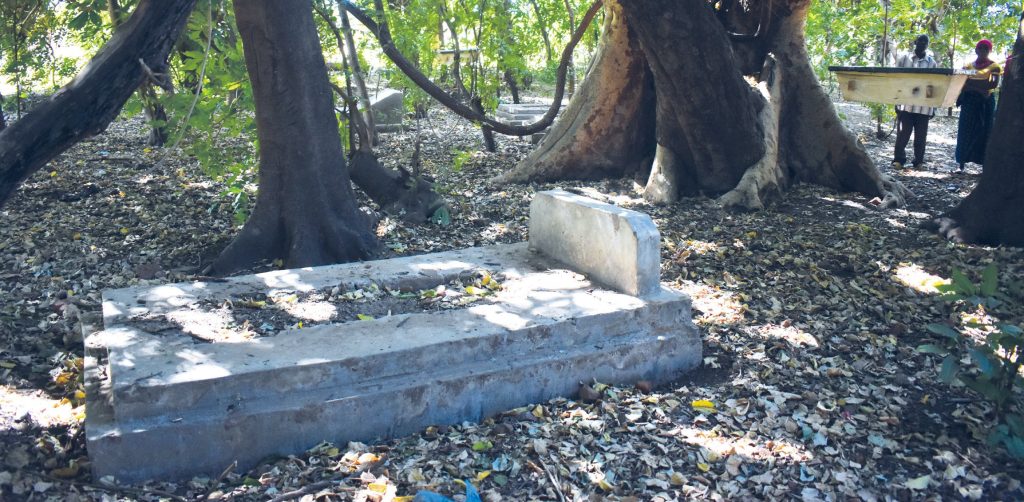
“Trees are a matter of life or death for the living, but it is ironic that we only conserve them for the dead,” says Samuel Sineji Makwenda, from Traditional Authority ( T/A)Chembe in Salima District along Lake Malawi.
The lamented irony escorts travellers’ eyes across the length and breadth of the country.
“These trees refresh the air we breathe and cool down the planet getting warmer,” Makwenda says.
Even more ironically, the lush graveyards persist as protected forest reserves wane under population pressure.
Illegal logging has decimated forests nationwide amid the rapidly growing population’s frantic search for building materials, charcoal, fuelwood and new farmlands.
Locals and experts credit collective ownership and rules for the enduring green cover in burial sites.
Traditional leaders only allow community members to pick firewood in the deathly places for communal projects and during public events, especially funerals.
“It takes a whole village to protect a graveyard and we are all winners, but the traditional leaders have a final say on who enters these sacred spaces,” says Bizwick Muli of Chankwa Village in the area.
This exposes how indigenous beliefs and community ownership help to save natural resources for common good.
However, the shrinking forests have left some graveyards under siege lately.
The clandestine raids have compelled Muli’s village along Lake Malawi to add buzzing security to protect the vanishing gravesites.
“It’s sacrilegious that destroyers are turning to burial sites after wiping out neighbouring forests. These bees are our security guards. They repel those who fell trees without permission,” says Bizwick.
He leads his village natural resources management committee.
Such groups have placed 11 beehives in four graveyards across Chembe.
“We are killing two birds with one stone,” he says. “Beekeeping guarantees us grave security and natural honey for sale so that our community can reap the benefits of protecting forests.”
The novel initiative is underway in four gravesites across T/A Chembe, where trees are not only far apart, but confined to settlements surrounded by bare crop fields.
“We’ll dot every graveyard with beehives until we bring back the forests that once made our area beautiful, full of fresh air and not prone to flooding and drought,” says Muli.
The volunteers received support from the Scottish Government through DAI in partnership with World Relief to embark on beekeeping in forested zones and plant trees in bare grounds.
“From the start, we consulted local chiefs and they were happy with this win-win deal. No one can enter the graveyard without their permission,” Muli narrates.
The volunteers have placed a single beehive in Njolo graveyard, three in Mwefuli, another three in Ombwi and four in Chankhwa.
They have also outlawed the plunder of the protected trees, making loggers liable to pay a K50 000 fine or a goat for community projects.
“If one braves the bees, we’ll fine them accordingly because everyone suffers when trees disappear,” he says.
World Relief economic empowerment manager Thokozani Banda says the initiative seeks to reduce the loss and damage caused by climate change.
“People have cut trees, so it was difficult to find intact forests. That’s why we placed the beehives in graveyards where the trees remain, but this is a short-term measure until the newly planted trees grow and the forests are thick enough for the purpose,” he said.
Some of the newly planted trees can be seen along the banks of the flood-prone Lifidzi River, which has swept away farmlands and homesteads on a degraded stretch the size of at least 100 football grounds.
The Food and Agriculture Organisation of the United Nations (UN) estimates that Malawi loses up to 30 tonnes of topsoil per hectare annually. This is enough to fill an articulated truck carrying a 40-foot shipping container
The locals along the river that pours into the country’s largest lake say flash floods have displaced over 70 households in a decade.
“It has swept over half of the village, including fertile croplands and graveyards, to the lake,” says Makwenda.
The 2022 Global Land Outlook by the UN Convention to Combat Desertification shows 20 to 40 percent of land globally has suffered some form of degradation.
This affects nearly half the world’s population and spans croplands, drylands, wetlands, forests and grasslands.
The worst hit include smallholder farmers like Makwenda, the backbone of the country’s economy and food production.
The repeated floods worsened by climate change have robbed the farmer in Salima of a fertile alluvial field where he once grew cotton, maize and cowpeas.
UN reports show that of Malawi’s 9.4 million hectares of land, over eight million are already degraded or at risk of degradation— that is almost the entire country.
The country’s land degradation is fuelled by rapid deforestation, steady demands for settlement and unsustainable agriculture.